
An informed voter needs a basic understanding of the judicial branch of Florida’s government because, in Florida, voters elect all trial court judges and vote in retention elections to keep appellate judges in office.
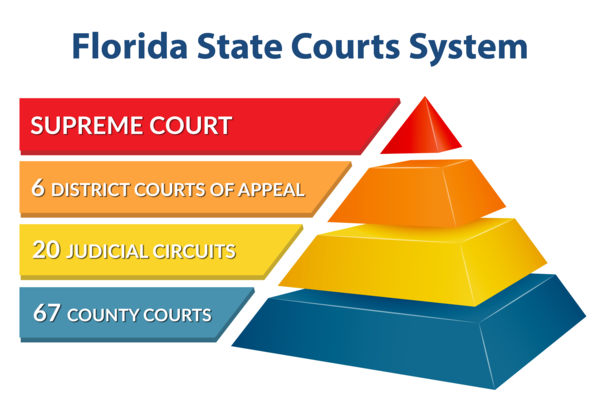
The system of state courts within the judicial branch of government is comprised of the Supreme Court, six district courts of appeal, 20 circuit courts, and 67 county courts.
The judges at each level of the court system play a distinct role in providing justice across the state.
In this primer, we will examine the jurisdictions, qualifications, terms of office, and compensation of judges at each level, as well as the individuals currently holding judicial office. We will close with tips to help you make informed decisions when voting for judges.
Supreme Court
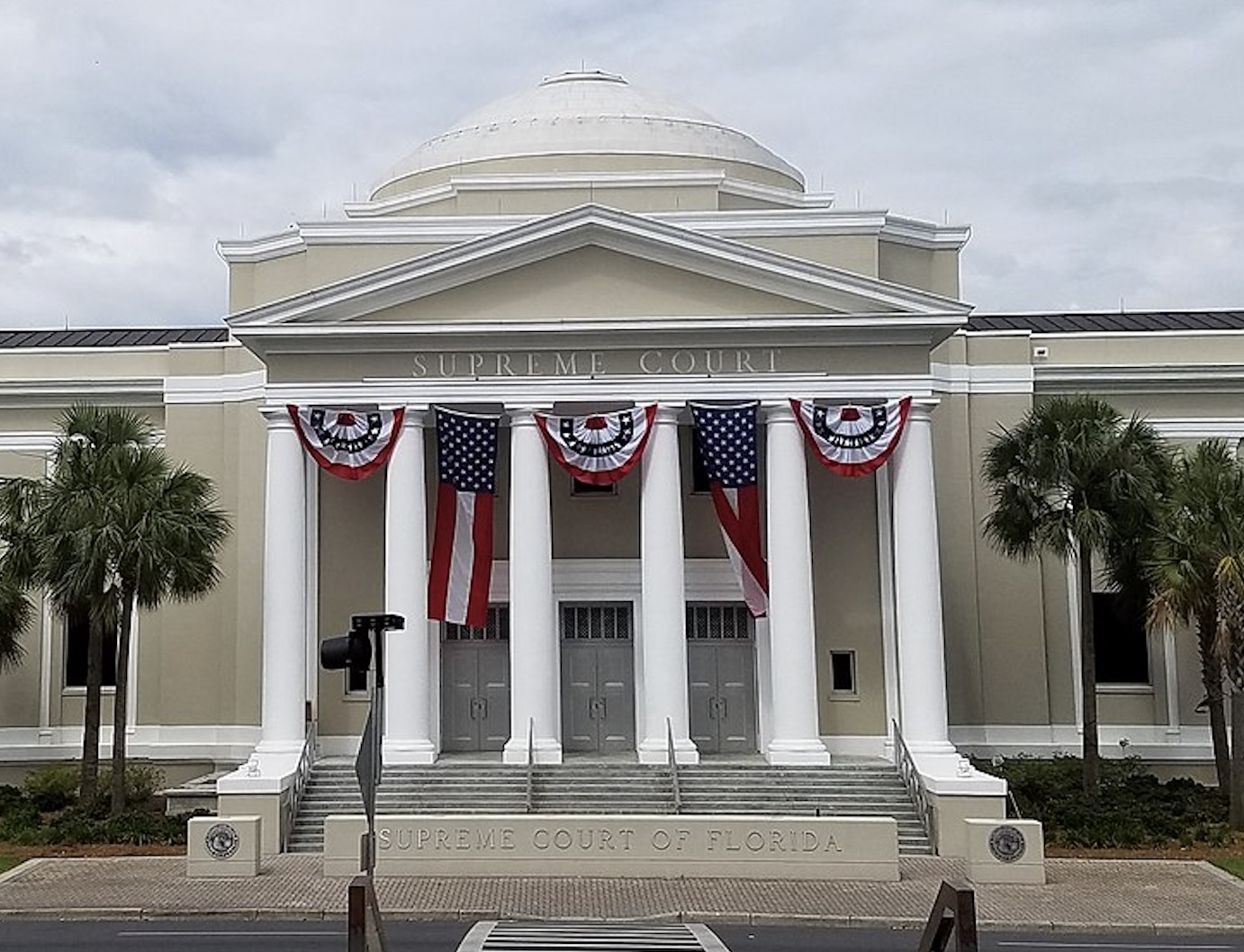
Florida’s Supreme Court is composed of seven justices. At least five Justices must participate in every case, and at least four must agree to reach a decision.
A “chief justice” is elected by the justices to preside for a two-year term as the chief administrative officer of the judicial branch.
The Supreme Court is the highest appellate court in the state. It has the authority to hear or not hear most of the cases it considers, and most appeals are not accepted for review.
However the Supreme Court is required to review all death sentences imposed by trial judges and all District Courts of Appeal decisions declaring a state statute or provision of the state constitution invalid. It also is required to review trial court rulings upholding local government bonds and decisions by state utility regulators concerning rates or service.
Read more about the Florida Supreme Court here. Visit its website here. View current court members here.
District Courts of Appeal

The purpose of the district courts of appeal (DCA) is to provide the opportunity for review of lower courts’ decisions by multi-judge panels. District courts of appeal correct harmful errors and ensure that decisions are consistent with the law.
Their decisions are generally final unless the Florida Supreme Court accepts discretionary review.
Florida is divided into six judicial districts to hear appellate cases.
In each district court, a chief judge, who is selected by the body of district court judges, is responsible for the administrative duties of the court.
Read more about Florida’s six district courts of appeal here.
Collier County is in the Sixth Appellate District, which was established by statute in 2022 and became effective on January 1, 2023. It was formed by realigning parts of the 9th, 10th, and 20th circuits, including Collier County, as recommended by a Supreme Court committee to “significantly improve the judicial process.” Read more of the history here. View current judges of the 6th District here.
Circuit Courts
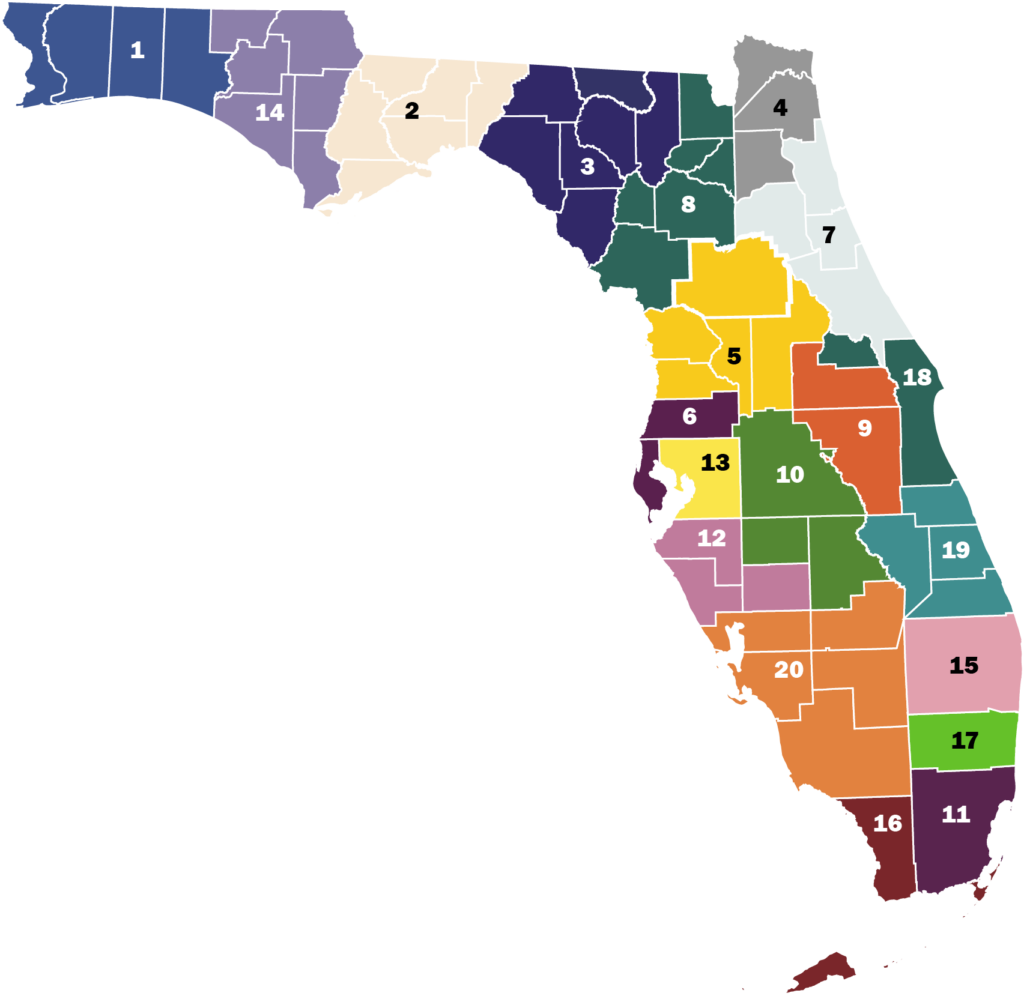
The circuit courts are sometimes called courts of general jurisdiction in recognition of the fact that most criminal and civil cases originate at this level.
Circuit courts have original jurisdiction in civil matters where the amount in controversy exceeds $50,000; controversies involving the estates of decedents, minors, and persons adjudicated as incapacitated; cases relating to juveniles; and criminal prosecutions for all felonies. They also have jurisdiction over tax disputes, real property title actions, declaratory judgments, injunctions, and extraordinary writs.
Most jury trials in Florida take place in circuit court before a single judge.
In addition, certain appeals from county courts are typically handled by three-judge panels. Thus, circuit courts are simultaneously the highest-level trial courts and the lowest-level appellate courts in Florida’s judicial system.
Florida is divided into twenty judicial circuits, each covering one or more counties.
A Chief Judge is elected by the circuit and county judges in each circuit, typically for a two‑year term. The Chief Judge oversees the administration of all trial courts, including docket management, judge assignments, and coordination with the Supreme Court’s Chief Justice.
Read more on Florida’s circuit courts here. Find information about judges serving in each circuit
The Florida Trial Courts website contains links to the websites of each of the twenty circuit courts. Click on the district for information about judges serving in each circuit.
Collier County is one of five counties in the 20th Judicial Circuit. (The others are Charlotte, Glades, Lee, and Hendry). Click here for the 31 judges currently serving on the 20th Judicial Circuit. (Toggle search to Collier Circuit Judges.)
County Courts
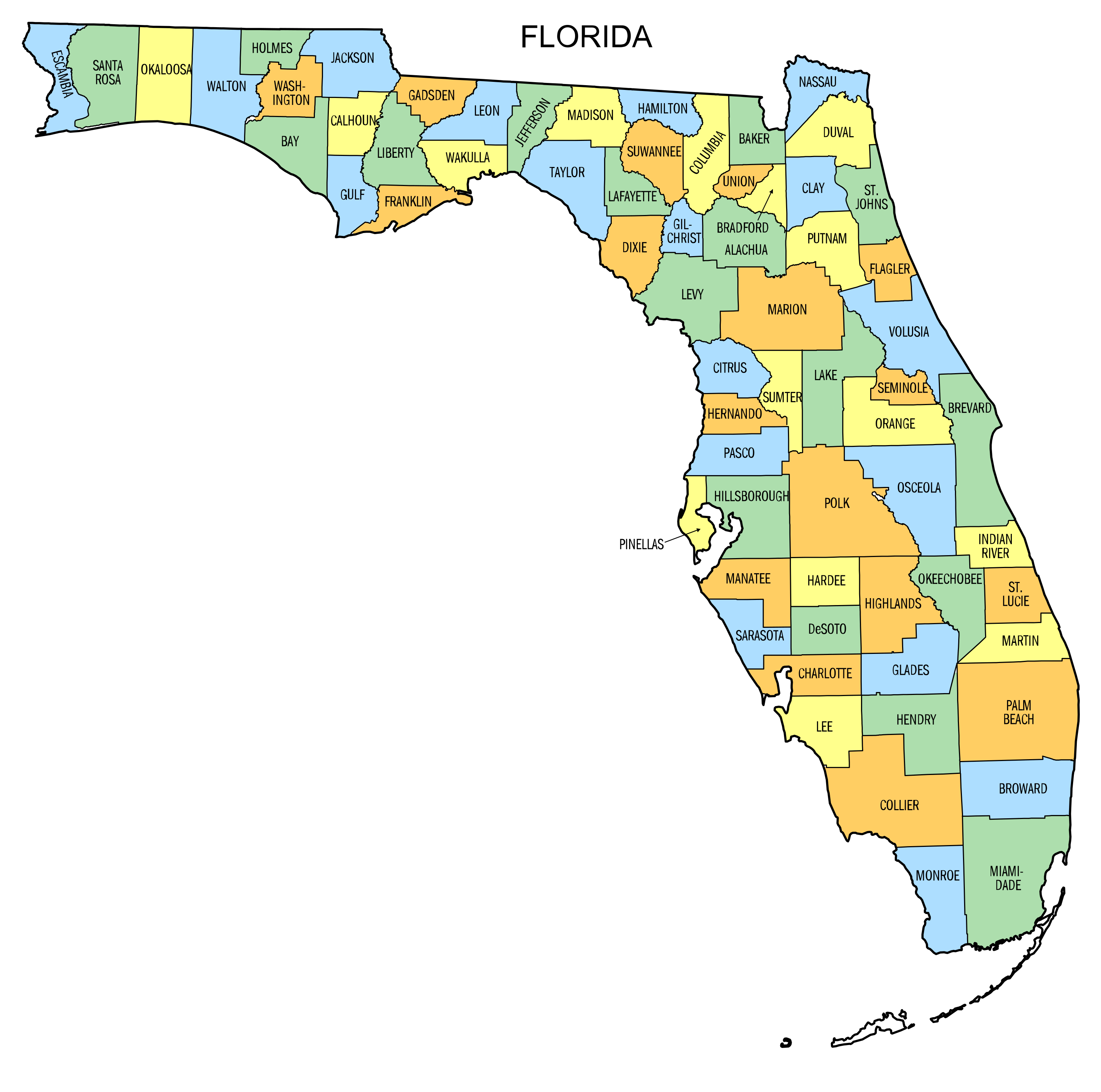
The Florida Constitution establishes that there is one county court in each of Florida’s 67 counties.
Most non‑jury trials in Florida occur before a single county court judge.
The trial jurisdiction of county courts is established by statute. Under statutes effective January 1, 2023, county courts have original jurisdiction in civil disputes involving $50,000 or less, small claims cases of $8,000 or less, misdemeanors, traffic matters, and municipal/county ordinance violations—earning them the nickname “the people’s courts.”
The number of judges in each county court varies with the county’s population and caseload.
Read more on Florida’s county courts here. Click here for the six judges serving as Collier County judges. (Toggle search to Collier County Judges.)
Qualifications, Terms, and Compensation
Qualifications

To be eligible for the office of county judge, a person must be a registered voter in the county and have been a member of The Florida Bar for the preceding five years, except in counties with populations under 40,000, where bar membership alone suffices.
To be eligible for the office of circuit judge, a person must be a registered voter within the circuit and have been a member of the Florida Bar for the preceding five years.
To be eligible for the office of district court judge or Supreme Court Justice, a person must be a registered voter in Florida and have been a member of the Florida Bar for the preceding ten years.
In addition, a judicial candidate must live in the geographic area they will serve when they take office.
Terms of Office
Florida justices and judges serve six-year terms and have no term limits.
Mandatory Retirement
While there are no judicial term limits, the Florida constitution does provide for mandatory retirement of justices and judges. As amended in 2018, judges must retire on their 75th birthday. Before that amendment, judicial retirement was required at age seventy.
Compensation
Judicial compensation, effective July 1, 2025, is as follows:
- Supreme Court Justice – $264,136
- District Court Judge – $223,318
- Circuit Judge – $200,836
- County Judge – $189,755

Elections
While Florida voters elect all trial court judges in nonpartisan, contested elections, appellate judges (District Court judges and Supreme Court justices) are chosen through a merit-selection and retention system.
Supreme Court Justices and District Court Judges: Merit Selection and Retention
In Florida’s merit selection and retention system of selecting Supreme Court justices and district court judges, the Governor appoints new judges from a list of names submitted by a Judicial Nominating Commission, all of whom are appointed by the Governor.
Those judges must later face yes/no retention votes statewide (for the Supreme Court) or by district (for DCAs). Their first retention vote happens at the next general election more than one year after appointment, with subsequent retention elections every six years.
As a result, after the initial appointment, voters decide if justices and appellate judges should continue serving.
If not retained in office, the justice or judge will be replaced in the same manner as appointed.
Though, according to the Florida Bar, no appellate judge has ever lost a retention vote since the method began in 1978, the process provides a way for voters to hold judges and those who appoint them accountable.
Read more about merit selection and retention here and here.
County and Circuit Court Judges: Competitive Election

County and circuit court judicial candidates run in nonpartisan primaries. Any candidate receiving more than 50% of the votes in the primary wins outright and the race is removed from the general-election ballot, unless there is a qualifying write-in. If no candidate secures a majority, the top two candidates advance to the general election.
Unopposed candidates are automatically elected and do not appear on the ballot.
All judicial races are nonpartisan, and political parties are prohibited from endorsing or campaigning for judicial candidates.
Helping Voters Decide
Judicial elections are nonpartisan, and judges and justices are not allowed to discuss issues that might come before them in court. But there are several things you can do to inform your vote.

The Florida Bar publishes “The Vote’s in Your Court” as a resource for voters regarding judges and judicial elections.
Additional sources of information include judicial biographies, videos of judges at work, results of prior merit retention votes, and knowledge of which governor appointed them. A Google search of each candidate’s name might also turn up news articles of interest.
You can also read judges’ opinions on cases they’ve decided, found here for Supreme Court justices and on your District Court of Appeals’ website found here.
I also research and share what I learn about Supreme Court justices and Sixth Circuit, 20th District, and Collier County judges on the ballot in Sparker’s Soapbox.
I hope this primer post about Florida’s Judicial Branch of government, the Florida court system, and the election of judges has helped you be a more informed voter.